
An argument I hear from many people today, including but certainly not limited to children is this: “I don’t need to read the book, I have watched the documentary” or “I have it on my phone”. After all, how can the medium (paper versus screen) affect the outcome? This argument seems justified at first glance but is in fact specious.
The question, indeed is not really about the medium, but rather how one interacts with it. Do you use the television show or that YouTube clip as a means of distraction, or are you involved with it? Do you use the activity to draw you into a stultifying stupor? Or do you use the activity to engage with, and bring out certain creative energies within you? Let’s look at an example. Imagine you are reading a book, and your only goal is to get through the book to proclaim that you read ten books this year. Contrast this with reading four books a year, but you have sat down with the express intention of learning from it. You perhaps took notes, you jotted things down into your diary, you thought that the author could have written chapter two a little more effectively, and you contrasted these lines with a paragraph you read in that book. I suspect you get the difference. In the first instance, reading was superficial The real goal was to show off your accomplishments to others. In the second case, it was deliberate – you enjoy reading for its own sake i.e. you loved reading. This meant that you expressed your love through reading. The entire activity was sustained by creative inquiry. Love always expresses itself as creativity. The urge to know and discover more about the other.
Television and other similar forms of digital entertainment are not inherently bad. They can be useful if used well. Unfortunately, thanks to advertisement and selective programming, only that which is ‘sellable to the masses’ is useful. This is because most people do not want to invest their time and energy in creative expression. They work at hard, boring, mind-numbing jobs and all they want to do when they get home is switch off their minds and feelings by switching on the screen. The entertainment industry of course happily swoops down on such people and predates upon their attention (whatever little of it is remaining). This is why today’s entertainment has stooped to the lowest possible denominator. They say that they do not hold any moral responsibility to ensure the content leads to the betterment of man. They say it is a marketplace, which means things are governed by demand and supply, immaterial of whether the supply of such goods leads to the betterment of man. However, media plays an important role in shaping public opinion and influencing choices. People’s values are influenced by the media, which means it isn’t necessarily amoral.
The state of our entertainment is merely a reflection of our society. We have removed all meaning – from work, from our community, from our religion, from our family. Everything is purely transactional – like in the marketplace. You work in order to earn money. You live in a neighbourhood because it is considered posh. You have a partner because you are lonely. We have been taught that objects, people and relationships exist to satisfy specific needs. Period. Nobody asks us, “So how do you wish to contribute to this relationship, to this neighbourhood”. I don’t mean this from a sense of obligation i.e. “You must contribute to me”, but rather from a sense of wanting to do so joyfully i.e. “What do you desire to actually bring to this world?”.
This means we denigrate ourselves to be strictly utilitarian. We tell our teenage children: “Haven’t I given you the money? Go and entertain yourself”. Money, especially is used as a proxy for true involvement. We think that such an attitude of shirking our responsibilities leads to freedom. It does not. Because true joy, true contentment in life, comes from creative expression. This is the only source of contentment in life. Nothing else. In the case of your children, it would be planning a camping trip and spending quality time with them. Isn’t this more joyful than throwing money at them?
The same is true with the forms of ‘entertainment’ we choose to engage with. As a matter of fact, all entertainment is useless. What is useful is something that lights up your eye and you go “Wow!” (I’m thinking of 95-year-old David Attenborough jumping into a deep water submarine to record hitherto unknown species). What such programs do is that they inspire you, they challenge your status quo and a ray of warm sunlight enters your soul, showing you that there is a better way to live life. In the ultimate analysis, books or television are immaterial. What matters is the manner in which you engage with them. Did you do it passively to switch off your mind, or did you do it creatively, to ignite it?
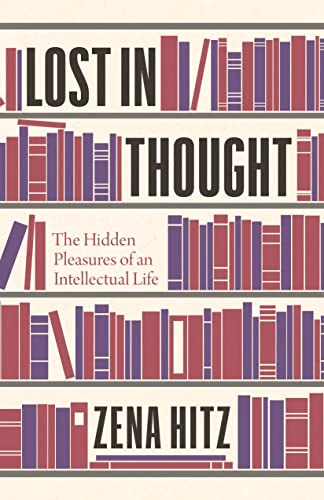
PS: This post was piqued by a very thought-provoking book that I am currently reading. I highly recommend this to anyone who either leads or is interested in leading a solitary, yet rich inner life.


 Journey of a thousand words